The Closet Inspection
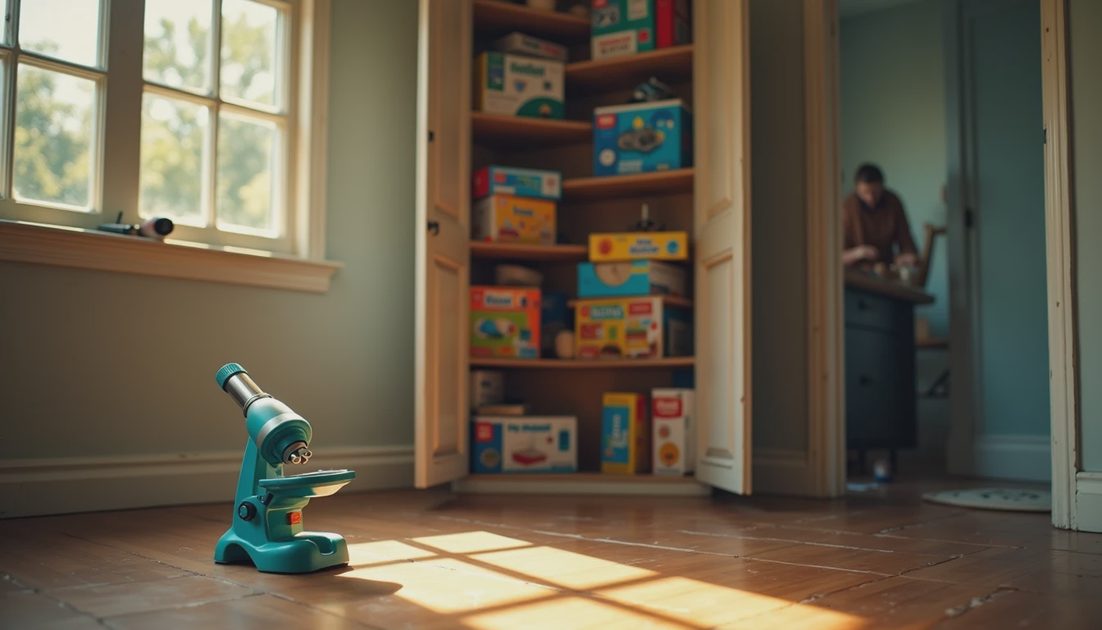
Six months after Theo's eighth birthday, I did something I've been avoiding. I opened the hall closet and looked at the shelf where STEM kits go to die. There were five of them. Boxes with cool graphics, promises of robots and circuits and scientific discovery. Some were partially assembled. Some had pieces missing. Most hadn't been touched since the week they were opened. I bought all of them. Every single one. I fell for the box every time. Theo loves building things. He loves figuring out how stuff works. On paper, STEM kits are perfect for him. In reality, most of them aren't. They're homework disguised as toys. They require patience he doesn't have, reading he doesn't want to do, and assembly that feels like a chore. So I went through the closet. I pulled out the survivors and the casualties. Here's what I found.
The Survivors: What Actually Lasted
1. The Simple Snap Circuits Set
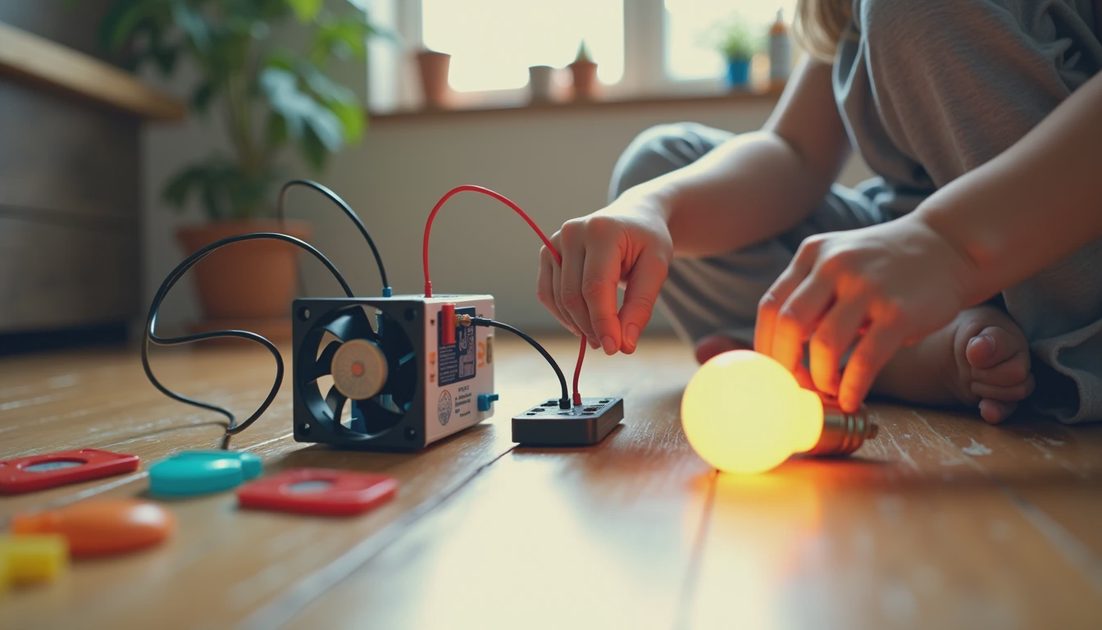
This one surprised me. It's a basic snap circuits kit — you connect components on a plastic board and make a light turn on, a fan spin, a buzzer buzz. No coding. No instructions longer than a few sentences. You just snap things together and see what happens. Theo built a fan on day one. Then he took it apart and built a light. Then he combined them and built a light with a switch. No reading required. No failure state. Just trial and error. He still pulls it out every few weeks. Not because he's learning electronics. Because it's fun. The learning happens by accident. That's the thing about STEM gifts for kids — they don't need to be educational on purpose. They need to be interesting first. The education follows.
2. The Magna-Tiles That Never Got Old
These aren't technically STEM. They're just magnetic tiles you build into things. But Theo has been playing with them for three years now. He builds houses, towers, bridges. Sometimes he knocks them down on purpose. Sometimes he makes them as tall as he can and invites June to help. They survived the closet because there's no right way to use them. No instructions. No goal. Just building.
2. The Microscope That Made Everything Interesting
This was a gift from Lily's parents. A simple children's microscope — plastic, LED light, not expensive. Theo spent an entire afternoon looking at leaves, his own hair, a dead fly he found on the porch. He still uses it when something catches his eye outside. It turns a walk in the yard into a discovery mission. No setup required. Just turn it on and look.
The Casualties: What Ended Up in the Closet
1. The Robotics Kit That Required a Tablet
This one looked amazing. Build a robot, connect it to an app, program it to move around. The box was huge. The promise was huge. The reality was a kid who spent more time troubleshooting Bluetooth than actually building. Every time Theo wanted to use it, he needed me to help. Every time he needed help, I was busy. Every time I was busy, the kit went back in the box. That's the problem with best STEM gifts for kids that require adult supervision. They sound great in theory. In practice, they become another chore for the parent.
2. The Chemistry Set That Made a Mess
This one was my fault. I bought a chemistry set with powders, liquids, and test tubes. Theo loved the idea. The reality was a kitchen counter covered in baking soda and a kid who wanted to mix everything together just to see what happened. He used it twice. The cleanup took longer than the experiment. It sits in the closet now, half-full, waiting for a day when we both have the patience for it.
Why Most STEM Kits Fail
Here's what I learned from the closet inspection. The kits that survived were simple. No apps. No complicated instructions. No adult supervision required. They were toys first, lessons second. The kits that failed were complex. They required setup, reading, troubleshooting. They felt like school. And when a kid feels like they're doing homework on a Saturday afternoon, they walk away. I kept buying the complex ones because I wanted Theo to learn things. I wanted him to be excited about science and engineering. But I was buying what I wanted him to like, not what he actually liked. He likes figuring things out by doing them, not by reading about them. The best gifts for 8 year old boy aren't the ones that promise to teach. They're the ones that let him discover. The microscope, the snap circuits, the Magna-Tiles — they don't tell him what to learn. They let him find it himself.
What I'd Buy Again
If I were starting over, I'd skip the robotics kit and the chemistry set. I'd buy the snap circuits, the microscope, and a bin of Magna-Tiles. Maybe a cheap telescope if he starts asking questions about the stars. The rule is simple: if it requires an app, it's a risk. If it requires reading more than three sentences, it's a risk. If it requires me to be involved every time, it's a risk. The kits that work are the ones he can pull off the shelf himself, open himself, and figure out himself. The learning happens because he wants to know, not because the box told him he should. I've bought enough STEM kits to know which ones work. The ones that collect dust are the ones that ask too much. The ones that survive are the ones that let him be a kid first and a scientist second. That's the file. That's what I learned from a closet full of good intentions. STEM gifts for kids that don't collect dust aren't about the technology. They're about the kid who uses them. If they can't figure it out alone, they won't figure it out at all. And next time I see a robotics kit in a store, I'm going to keep walking. I've got enough in the closet already.


No comments yet — be the first to share a thought.