Four Wrong Knives Before One Right One
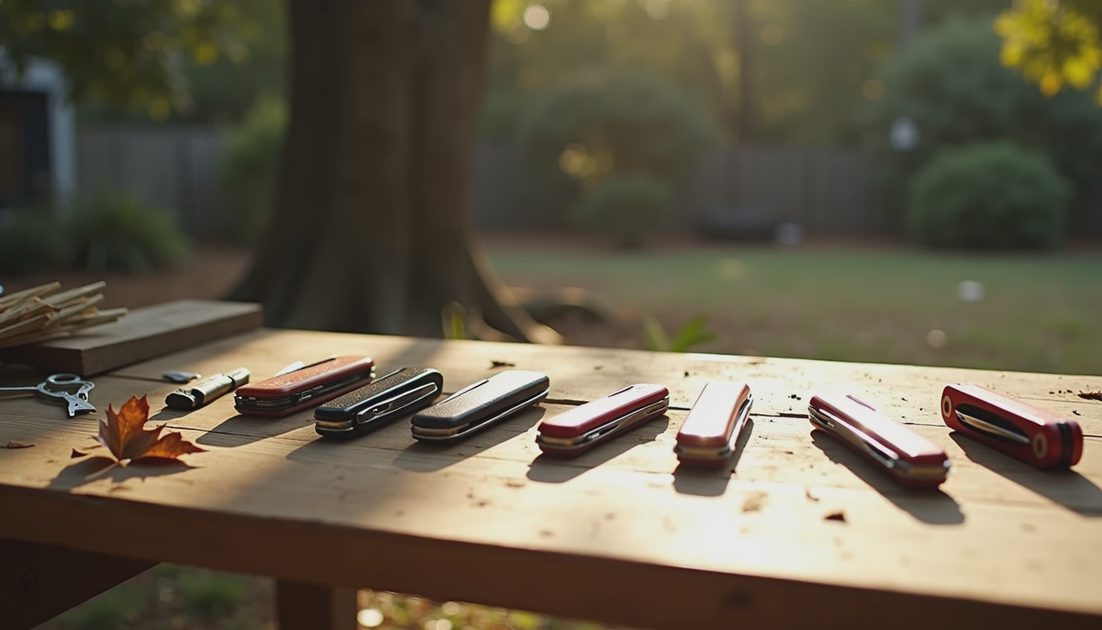
I bought Theo his first pocketknife when he was seven. It was too big. His hand couldn't close around it properly. He dropped it three times in the first five minutes. I put it back in the drawer and didn't try again for a year. I bought the second one when he was eight. It was too sharp. Not the blade — the whole thing. It had sharp edges on the handle, sharp corners, sharp everything. It was a knife for an adult, sized down for a kid. That's not how it works. Kids don't need smaller adult knives. They need kid knives. The third one I bought was a cheap model from a hardware store. Plastic handle, thin blade, the kind of thing that breaks the first time you actually use it. The locking mechanism failed in a week. I threw it away. The fourth one was too complicated. Multiple blades, a corkscrew, a tiny screwdriver, a toothpick, tweezers — like a Swiss Army knife designed by someone who forgot who was using it. Theo spent more time opening and closing the different tools than actually using the knife. Too many options. Too many decisions. Then I found the right one. Small red Swiss Army knife with one blade, scissors, and a toothpick he'll probably lose in a week. That's it. That's the whole thing. He's used it every day for a month. Here's what I learned from the four wrong ones.
The Wrong Knives
Wrong #1: Too Big
The first knife I bought was a standard-sized pocketknife. Nothing fancy. I figured he'd grow into it. He didn't. His hands were too small to close around the handle properly. He couldn't open it without using two hands and his teeth. I was trying to buy a tool he'd use later, instead of a tool he could use now. That's a mistake I keep making — buying for the kid he's going to be, not the kid he is. An 8-year-old doesn't need a pocketknife that fits a grown man's hand. He needs one that fits his.
Wrong #2: Too Sharp (in the Wrong Places)
The second one was marketed as a "junior knife." Smaller blade, smaller handle. But the handle had sharp edges. The corners dug into his palm. He complained it hurt to hold. I told him he'd get used to it. He didn't. He stopped asking to use it. A first pocketknife for a kid should be comfortable in their hand before it's anything else. If it hurts to hold, they won't use it. And if they won't use it, you've wasted your money and taught them that knives are uncomfortable.
Wrong #3: Too Cheap
The third one was a mistake I knew I was making when I bought it. Fifteen bucks at a hardware store. Plastic handle. Thin blade. I told myself "he's a kid, he'll lose it anyway." But it broke. The locking mechanism failed. The blade wobbled. A knife that breaks is dangerous. A kid who's holding a knife that wobbles is a kid who's going to get hurt. I should have known better. I did know better. I just didn't want to spend the money.
Wrong #4: Too Complicated
The fourth one was a Swiss Army-style knife with seven tools. Seven. He didn't need seven tools. He needed a blade, something to cut string, and maybe scissors. The corkscrew was just a weird metal thing that poked him. The screwdriver was useless. Too many options made him fidgety. He'd open one tool, close it, open another. He wasn't using the knife. He was playing with a gadget. I wanted him to have a tool. I gave him a distraction.
The Right Knife
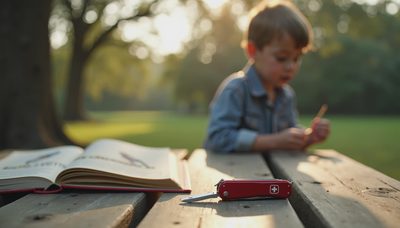
The right one was simple. Small red Swiss Army knife. One blade. Scissors. A toothpick he's already lost and replaced twice. That's it. Three tools. He can open it with one hand. The blade locks securely. The handle is rounded and smooth. It fits his palm. It cost thirty-two dollars. That's more than the cheap one, less than the complicated one. But he uses it. That's the difference. When I gave it to him, I showed him how to open it, how to close it, how to hold it when he's cutting something. I told him he could only use it when I was around. I let him cut a stick in the backyard. He whittled for an hour. An hour. An 8-year-old sat still for an hour, scraping bark off a stick. He didn't need more features. He needed to feel like he was doing something real. That's the thing about best gifts for 8 year old boy — they don't need to be complex. They need to be real. A knife that works, fits his hand, and lets him do what he sees me doing. That's it.
What I Should Have Done Differently
I should have started with the right one. I could have saved myself four trips to the store and a bunch of money. But I didn't know. I was guessing. The rules I follow now are simple. The blade doesn't need to be big. One and a half inches is plenty. A smaller blade is easier for a kid to control and less likely to cause serious damage if he slips. The handle needs to be smooth and rounded. No sharp edges. No corners that dig in. Test it in your hand before you give it to him. A locking mechanism is non-negotiable. A blade that folds while he's using it is the fastest way to a bad day. It needs to lock open. It needs to stay locked. And a single blade is enough. Maybe scissors. That's it. Extra tools are extra distractions. He can have a multi-tool when he's older. Right now, he needs to learn how to use one tool well.
Why You Should Let Them Cut Themselves (A Little)
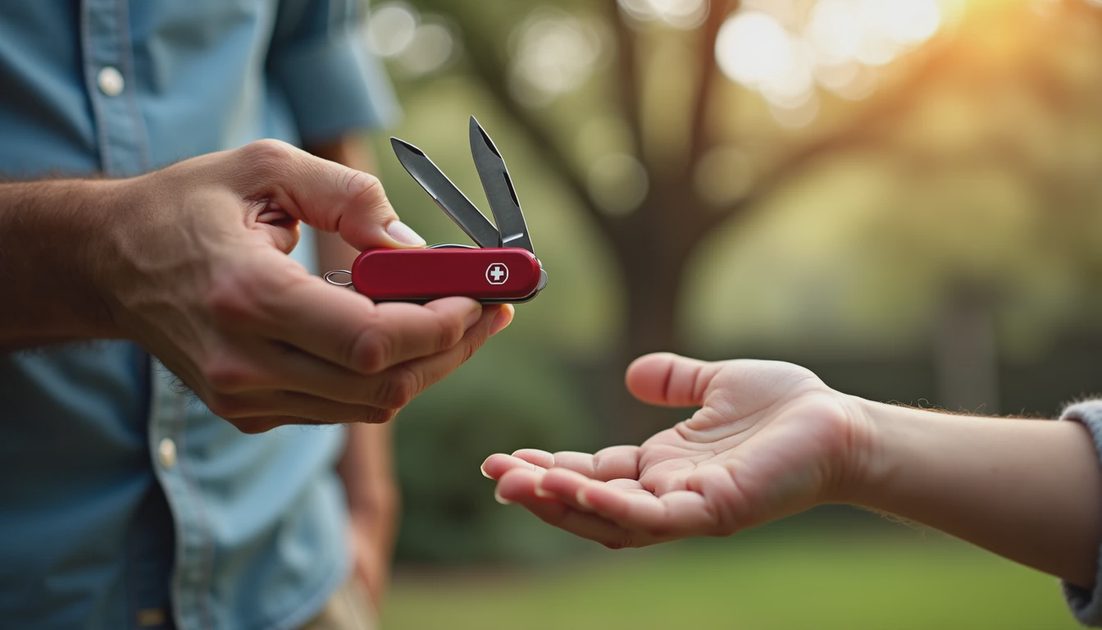
This is the part that scares most parents. I get it. I was scared too. Theo cut himself on day three. Small nick on his thumb. He was whittling a stick, the blade slipped, and he got a paper-cut-style wound. It bled a little. He ran inside, showed Lily, got a band-aid, came back out, and kept going. He was more careful after that. Not scared — careful. He learned what the knife could do because he felt it do it. Not badly. Just enough to respect it. That's the real gift. Not the knife. The trust. The responsibility. The lesson that sharp things are useful and deserve respect. A kid who never gets a chance to learn that is a kid who never gets a chance to grow up. First pocketknife for a kid isn't about the knife. It's about what the knife represents. You're saying "I trust you." That's the whole thing.
The Final Word
If you're buying a pocketknife for an 8-year-old boy, skip the hardware store specials and the overcomplicated Swiss Army knives. Buy something simple, safe, and well-made. Test it in your hand. Make sure it locks. Make sure he can open it with one hand. Then give it to him and let him use it. Let him cut a stick. Let him whittle. Let him learn. He'll get a small cut. He'll be more careful next time. That's how kids learn — not by being protected, but by being trusted. I tried four wrong ones so you don't have to. Start with the right one. Your son will thank you. And he'll probably ask to borrow your knife less often, which is a win for both of you.

No comments yet — be the first to share a thought.